
Become an Office Queen
Mille Crepe Studios Co., Ltd.Simulation
2.91.09K Reviews
- Version
- 1.0.41
- Installs
- 10.00M
- Age Rating
- Teen
Screenshots



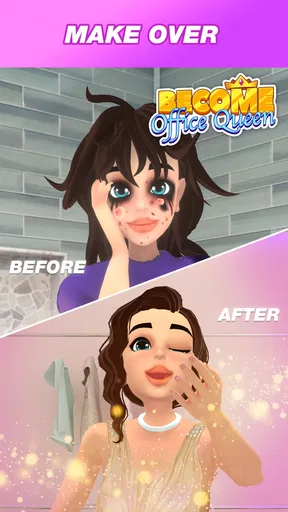
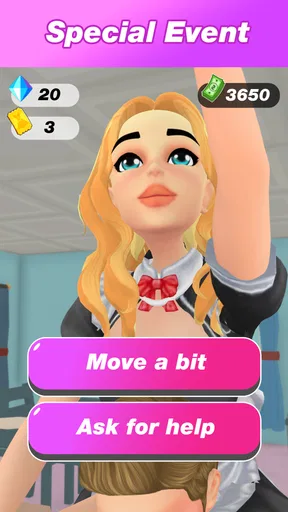
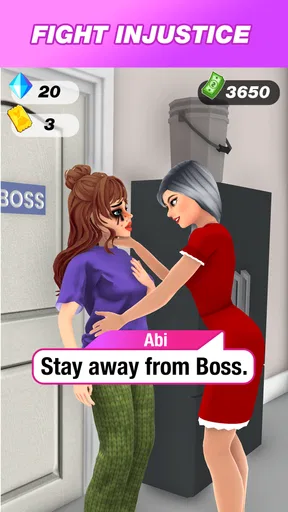


Our Review of Become an Office Queen
 Analysis by Appyee
Become an Office Queen is a free simulation game from Mille Crepe Studios Co., Ltd. built around the idea of helping a woman become successful in office life. I approached it expecting a light, goal-driven mobile experience rather than a serious workplace simulator, and that is the right way to view it. Its appeal is the quick fantasy of improving a career, making choices, and watching progress unfold in a setting that feels more relatable than farming, city-building, or restaurant management.
The game has reached over ten million installs, so it clearly connects with a large mobile audience. At the same time, its average rating sits at 3.0 from around eighty-one thousand ratings, which tells me that the experience is not universally satisfying. That combination is useful context: this is easy to try, but popularity should not be confused with polish or perfect balance. I found the most value in treating it as a short-session game with a career theme, not as a deep simulation that recreates office work in detail.
What the office-success idea feels like in practice
The central attraction is straightforward. You guide the main character through a climb toward success, making progress in a workplace-themed environment and dealing with the kinds of decisions and obstacles that make the journey feel like a game rather than a passive story. The store summary describes the goal as helping a lady become successful, while the short description presents it as an “Office Queen” experience. Those phrases are simple, but they communicate the fantasy clearly: begin with limited status and work toward a more confident, successful position.
That setup makes the game approachable. I do not need to learn a complicated economic model before understanding what I am trying to do. The office setting also gives the progression a familiar emotional hook. Many players understand the wish to improve their position, earn recognition, and handle difficult situations without needing a fantasy world or elaborate backstory to explain the motivation.
However, I would not install it expecting a detailed management simulator. The category is simulation, but the experience is better understood as a casual, goal-oriented interpretation of professional life. It uses the idea of career advancement to create momentum, not to teach management, budgeting, communication, or workplace strategy. That distinction matters if you are choosing between this and a more systems-heavy simulation game.
In everyday use, I can imagine opening it during a commute, waiting room visit, or a short break. The office theme gives each session a clear purpose, while the broader success goal makes it easy to return after putting the phone down. It suits players who enjoy visible advancement and simple decisions more than players who want long planning sessions with several competing resources.
Progress is the hook, but pressure can change the mood
The strongest part of this kind of design is the feeling that each small action contributes to a larger transformation. A character who starts from an ordinary position and moves toward success gives the player a reason to continue even when individual moments are simple. I found that the career framing does more work than a generic level counter would: improvement feels personal because it is attached to the character’s professional identity.
The trade-off is that progress-driven games can become repetitive when the underlying choices do not keep developing. Once I understand the basic rhythm, I start judging the game by how much new decision-making it adds, not merely by whether the next milestone is visible. If advancement becomes mostly a matter of repeating familiar actions, the office theme may no longer be enough to hold my attention.
This is also where pressure enters. A success fantasy can be motivating, but it can also make every setback feel like a demand to keep playing. I prefer to approach the game in short bursts and stop when the session stops feeling purposeful. That habit is especially useful in a free mobile game with optional purchases, because it keeps progress from becoming an obligation.
One practical tip is to decide beforehand whether I am playing for the story-like career fantasy or for maximum advancement. Those are not always the same goal. If I play for the fantasy, I can enjoy the character’s journey and accept a slower pace. If I play only to optimize progress, friction becomes much more noticeable, and any repeated task or delayed reward feels more irritating.
How spending affects the decision to keep playing
The game is free to download, but it includes in-app purchases ranging from $0.99 to $29.99 per item. That is the most important spending context for a new player. I would begin without paying and use the early experience to decide whether the core loop feels enjoyable on its own. A free entry point is helpful, but it does not automatically mean the full progression will feel equally comfortable without spending.
I would also avoid buying immediately just because a purchase appears during a moment of frustration. In a progress-focused game, the most tempting offer is often the one shown when I want to move forward faster. My rule would be simple: first check whether I still enjoy the ordinary rhythm, then consider whether a purchase improves convenience rather than merely relieving impatience.
That approach is not a judgment that the purchase system is unfair. The available purchase range tells me what financial commitment is possible, but it does not by itself reveal how necessary any item is, how often offers appear, or whether paid content changes competitive outcomes. I would not claim more than that. The sensible conclusion is that players should treat spending as optional entertainment money and set a limit before starting.
For parents, the Teen content rating is worth taking seriously. It is not a children’s preschool-style game, and the presence of in-app purchases means a younger player should use appropriate device controls and supervision. For adult players, the rating is a reminder to check the game’s tone and purchase prompts personally rather than assuming that a cartoon-like office theme makes it suitable for every age.
Is the game fair compared with other mobile simulations?
Fairness is difficult to judge from popularity alone. Over ten million installs show that many people have tried it, but the average rating of 3.0 suggests a meaningful portion of players found reasons to be dissatisfied. I read that as a signal to keep expectations measured. The game may work well for someone who wants a casual office fantasy while failing to satisfy someone looking for consistently rewarding simulation depth.
Compared with a farming or city-building simulation, the office setting feels more focused on personal advancement than on constructing a large world. That can be an advantage when I want a direct objective instead of a wide map full of systems. Compared with a management simulator, however, it is less likely to satisfy me if my main pleasure comes from hiring staff, balancing budgets, or responding to complex business conditions. The office theme should not be mistaken for a full professional-management toolkit.
Compared with choice-based narrative games, its appeal is the sense of progression and practical success rather than purely reading through branching dialogue. If I want character drama and carefully written consequences, another type of game may be stronger. If I want the quick satisfaction of helping a character rise through an office environment, this title has a clearer reason to return.
For me, competitive fairness also means asking whether another player’s spending can affect my experience. I would be cautious about calling the game competitive in the traditional multiplayer sense, because the confirmed details identify it as a simulation game but do not establish a player-versus-player structure. I therefore judge fairness mainly as the relationship between free progress and optional purchases, not as a contest against other users.
The best personal test is to play long enough to understand the normal pace before spending. Notice whether progress feels meaningful when using only the free path. Notice whether a purchase would add enjoyment or simply remove a barrier. That test is more reliable than assuming that every free simulation is generous or that every paid option is exploitative.
Small strategies that make the experience easier to judge
My first recommendation is to use the game as a scheduled short-session title. A fixed play window makes it easier to tell whether the loop is genuinely entertaining or merely good at pulling me back through unfinished progress. This is a useful distinction with career-themed games because the desire to “reach the next position” can continue even after the actual decisions have become routine.
Second, I would pay attention to the emotional difference between a setback and a slowdown. A setback can make the character’s journey feel dramatic, while a slowdown may simply feel like waiting. If the game gives me meaningful reasons to adapt, the pressure can be engaging. If I am only waiting for another opportunity to advance, I would rather pause than pay automatically.
Third, I would keep purchases separate from the question of whether I like the theme. I may enjoy the office fantasy while disliking the pace, or I may find the pace acceptable but not care about the career setting. Separating those judgments prevents a promising concept from persuading me to spend before the mechanics have earned that confidence.
Finally, I would compare the game with what I actually want from a simulation. If I want a relaxing routine, a farming title may offer more freedom. If I want strategic responsibility, a management game may be better. If I want a compact story of personal advancement, Become an Office Queen is more relevant. The right alternative depends less on the label “simulation” and more on whether personal career progress is the fantasy I want.
What I would want to know before installing
The developer is Mille Crepe Studios Co., Ltd., and the game was released on January 20, 2023. The current version is 1.0.39, and it supports devices running Android 7.1 or later. Those details make it accessible to many older Android phones, although compatibility alone does not tell me how smoothly it will run on a particular device.
The game’s free price removes the biggest barrier to trying it. I can install it and decide based on the actual feel of the opening experience rather than committing money first. That is especially valuable here because the rating is mixed: the game has around one thousand one hundred written reviews alongside its much larger rating count, so there is enough visible player reaction to justify a cautious trial rather than an automatic recommendation.
A likely user question is whether it is suitable for someone who dislikes in-app purchases. My answer is conditional. It is worth trying if I can ignore optional offers and remain comfortable with the free pace. I would skip it if even the possibility of purchase prompts makes me anxious, or if I know I tend to spend whenever progress slows.
Another question is whether it is good for children. I would not make that assumption from the office theme. The Teen rating and purchase availability mean I would choose a supervised setup for younger players. An adult looking for a casual career-themed game is a more natural audience.
Someone may also ask whether it can replace a genuine productivity or career-planning tool. It cannot. I see it as entertainment built around the emotional idea of success, not as advice for office skills or a practical guide to professional development. That is not a flaw as long as I use it for the experience it actually offers.
My trust verdict after weighing the trade-offs
I find the concept easy to understand and potentially appealing, especially for players who enjoy watching a character improve through an office-themed journey. The free entry point, broad device support, and simple success fantasy make it approachable. I can see it working well as a casual distraction for someone who wants a focused simulation idea without the complexity of running an entire city, farm, or company.
My reservations are just as important. The average rating of 3.0 means I would not recommend it blindly, and the purchase range means I would approach progression carefully. The game is not the right choice for someone seeking deep workplace realism, serious management strategy, or a clearly competitive environment. It is also a poor fit for anyone who dislikes repeated progression loops or feels pressured by optional spending.
My honest recommendation is to try it free, play slowly, and spend only if the ordinary experience already feels worthwhile. That standard protects the player from confusing impatience with enjoyment. If the office-success fantasy keeps me interested without demanding payment, the game can be a pleasant short-session simulation. If progress feels more like pressure than play, I would move to a different simulation whose systems better match what I want.
In the end, Become an Office Queen is most convincing as a light career-progression game, not as a complete model of office life. I would recommend it to a friend who likes personal advancement, quick mobile sessions, and a familiar professional setting, while being clear about the mixed reception and optional purchases. For that audience, it is worth a careful free trial. For everyone else, the same free price makes skipping it painless if the first sessions do not earn continued attention.
Privacy and Permissions
See what permissions an app requests and how it handles your data.
- Wi-Fi connection information
- view Wi-Fi connections
- Other
- view network connections, full network access, control vibration, prevent device from sleeping, Google Play license check
Verdict
Strengths of Become an Office Queen
- Fun makeover gameplay with quick, satisfying transformations.
- Simple controls make it easy for casual players to pick up.
- Fashion choices let you experiment with different office looks.
- Short levels work well for quick gaming sessions.
- Bright visuals and character animations make progress enjoyable.
Limitations of Become an Office Queen
- Gameplay can become repetitive after several makeover levels.
- Some outfits or upgrades may require in-app purchases.
- Ads can interrupt the experience between challenges.
- Limited customization may disappoint players wanting more control.
- Progression may feel slow without spending or watching ads.
Similar Picks in This Category
View All
Truckers of Europe 3
Wanda Software4.3

Town Building Life Simulator
XGame Global4.2

Fidget Toys Trading・Pop It 3D
Freeplay Inc4.7

Sculpt People
CrazyLabs LTD4.4

Scary Teacher 3D
Z & K Games4.2

Hair Tattoo: Barber Shop Game
CASUAL AZUR GAMES4.3
Frequently Asked Questions
What is Become an Office Queen about?
Become an Office Queen is a casual fashion and makeover game centered on office life, personal style, and career-themed challenges. You guide the main character through different work-related situations, choose outfits, improve her appearance, and make decisions that influence how she is perceived. It is designed for short, entertaining sessions rather than deep business simulation or complex strategy gameplay.
Is Become an Office Queen free to download and play?
The game is generally available as a free download, allowing players to start playing without purchasing it upfront. However, depending on the version and platform, it may include optional in-app purchases, advertisements, or both. These can provide extra items, rewards, or faster progress. Before downloading, check the current store listing for pricing, supported devices, and purchase details.
Does Become an Office Queen require an internet connection?
Some parts of Become an Office Queen may work without a continuous internet connection, especially basic gameplay and previously loaded levels. Nevertheless, an internet connection can be necessary for advertisements, cloud features, updates, special events, or in-app purchases. Offline availability may vary by device and game version, so it is best to test the game after installation rather than assume every feature works offline.
Is Become an Office Queen suitable for children?
Become an Office Queen is usually easy to understand because its gameplay focuses on outfits, appearance changes, and simple choices. However, parents should review the age rating and store description before allowing younger children to play. Advertisements, optional purchases, social themes, or fashion-related content may be included. Parental controls are recommended if the device is shared or purchases are enabled.
What should I know before downloading Become an Office Queen?
Before downloading, make sure your Android or iOS device meets the game’s current requirements and has enough free storage for the installation and future updates. The experience is best suited to players who enjoy casual makeover games, quick challenges, and visual customization. Progression may include ads or waiting periods, while some clothing and rewards could require purchases or repeated gameplay.
Play our best games!


